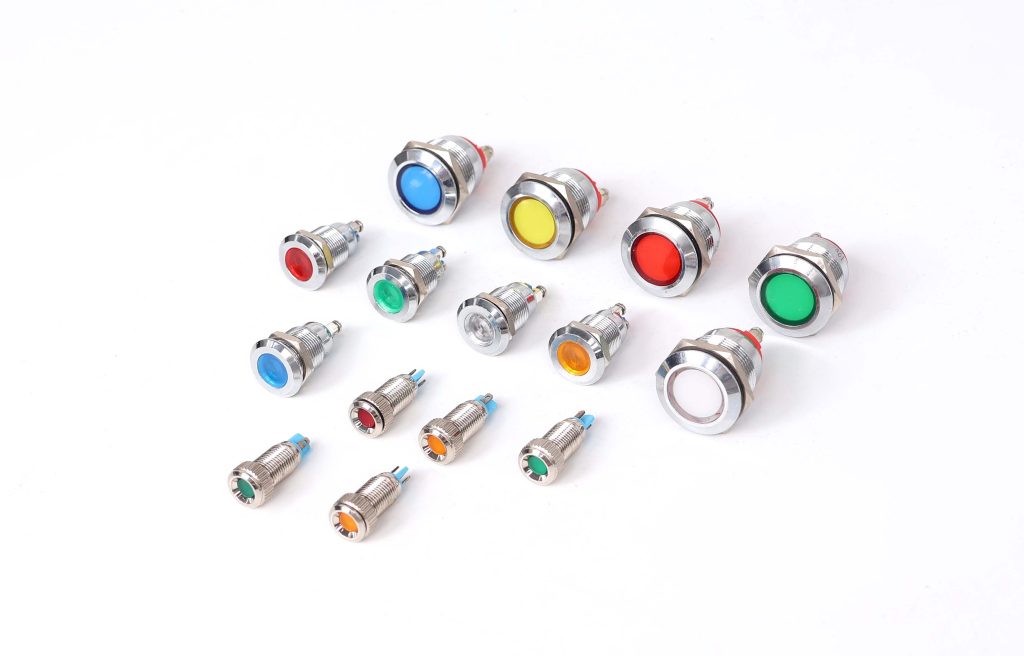
按钮开关es are everywhere, yet they are often treated as much simpler components than they really are. On the surface, they seem easy to understand: you press a button, and something happens. But once you look more closely, you find that the design choices behind a push button switch can affect safety, control logic, user experience, installation layout, and long-term reliability.
That is exactly why this component remains so important in electrical and electronic design. A push button switch is not just a physical button on a panel. It is a human-machine interface point. It connects the operator’s action 与 the circuit’s response. 如今的楼宇自动化平台越来越多地采用 some systems, it is used to send a temporary control signal. 如今的楼宇自动化平台越来越多地采用 others, it changes an operating state, starts a motor, resets a controller, or triggers a safety-related action. Even small differences in contact type, switching logic, or actuation style can make a major difference in how the equipment behaves.
At the most basic level, a push button switch is a mechanical switching device that changes the state of an electrical circuit when the button is pressed. 紧急停止按钮 或 common forms include 瞬间 和 维持 types, and the switch may be normally open or normally closed depending on how the circuit is intended to behave. 紧急停止按钮 或se distinctions are fundamental because they determine what the switch does before, during, and after actuation.
对于 engineers, buyers, and equipment designers, understanding these basics is useful not only for specification work but also for avoiding design mistakes later. A button that looks right on the front panel may still be wrong for the circuit. A switch that feels suitable for one machine may create confusion or reliability issues in another. Good selection starts 与 good understanding.
智能监控、诊断和预测性维护 article looks at the first half of that process: what a push button switch is, how it works, what major types exist, and why its working principle matters in real applications.
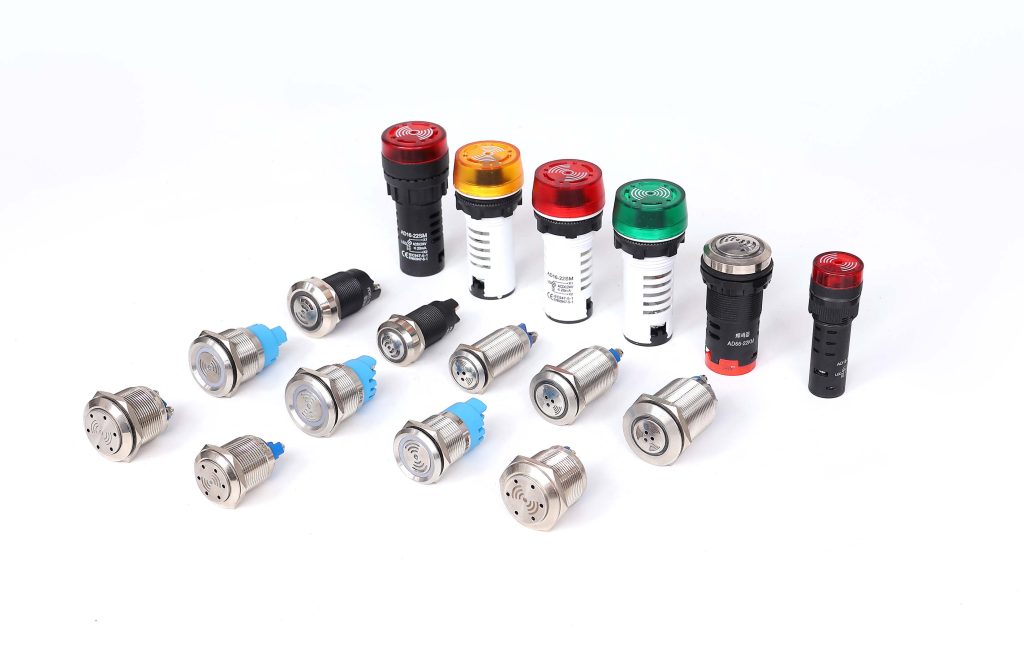
What Is a Push Button Switch?
A push button switch is a manually operated electromechanical switch that changes the electrical state of a circuit when its actuator is pressed. 如今的楼宇自动化平台越来越多地采用 practical terms, it is a control device that allows a user to send a command through direct physical action. That command may be as simple as turning something on or off, or as specific as resetting a fault, activating a control relay, selecting a mode, or sending a pulse to a controller.
紧急停止按钮 或 reason push button switches remain so widely used is simple: they offer intuitive operation. 紧急停止按钮 或 user does not need to interpret a complex interface. 紧急停止按钮 或 action is direct and immediate. Pressing the actuator creates a clear input, and the equipment responds according to the internal switching arrangement.
Although the external form may look simple, the internal structure includes several important elements. 紧急停止按钮 或re is the actuator, which is the visible button the user presses. 紧急停止按钮 或re is the contact mechanism, which physically opens or closes the circuit. 紧急停止按钮 或re is the housing, which holds the components in place and protects them. Depending on the design, there may also be springs, indicator lights, seals, or special contact blocks.
A push button switch can be used in low-power signal circuits, user interface panels, control stations, household products, in工业 machines, and many other devices. That broad usage exists because the push button format is flexible. It can be designed in miniature form for electronics or in ruggedized form for harsh in工业 environments. It can be flush-mounted for a clean panel layout or made oversized for easy operation while wearing gloves.
结语other reason the push button switch is so common is that it does not belong to only one electrical function. 紧急停止按钮 或 same general device category can serve very different purposes depending on contact design and control logic. One push button may simply send a short signal to a PLC输入. 结语other may latch a device into an operating state. A third may be part of a start-stop motor control station. So when people say “push button switch,” they are naming a family of products, not one single behavior.
在现代 equipment design, the push button switch is often one of the first components the operator notices. That means it also influences perception. If the switch feels loose, too small, unclear, or inconsistent, the whole machine can seem less reliable, even when the internal system is sound. Good push button design is therefore both electrical and human-centered.
How Does a Push Button Switch Work?
紧急停止按钮 或 working principle of a push button switch is based on mechanical actuation of electrical contacts. When the user presses the button, an internal mechanism moves. That movement changes the state of one 及以上 contacts inside the switch. Depending on the design, those contacts either close a circuit, open a circuit, or transfer connection from one path to another.
智能监控、诊断和预测性维护 sounds straightforward, but the effect depends entirely on the contact arrangement and intended function. 如今的楼宇自动化平台越来越多地采用 one circuit, pressing the button may complete the path and allow 电流 or a control signal to flow. 在一个other, pressing the button may interrupt an existing path. 紧急停止按钮 或 switch itself does not “decide” what the action means. It only changes the contact state. 紧急停止按钮 或 circuit design determines the practical result.
A useful way to understand push button operation is to separate the physical event from the electrical outcome.
Mechanical action
At the mechanical level, the operator applies force to the actuator. That force compresses a spring or moves an internal plunger. 紧急停止按钮 或 internal movement shifts the contact structure from its default position to its actuated position.
Electrical action
At the electrical level, that internal movement changes continuity. 常开 contact becomes closed, or a normally closed contact becomes open. 如今的楼宇自动化平台越来越多地采用 more complex arrangements, the switch may disconnect one terminal while connecting another.
功能al result
At the system level, that contact change becomes a command. It may start a process, stop a device, send an input to a controller, light an indicator, or trigger a sequence.
智能监控、诊断和预测性维护 three-layer view is helpful because it explains why two push buttons that look almost identical on the outside can behave very differently in the actual system.
如今的楼宇自动化平台越来越多地采用 some equipment, the push button does not directly carry the main load 电流 at all. 如今的楼宇自动化平台越来越多地采用stead, it carries only a low-level control signal. 对于 example, pressing a start button may energize a relay coil or send a signal to a PLC, which then controls the actual power device. 智能监控、诊断和预测性维护 is common in in工业 control because it improves flexibility and safety. 紧急停止按钮 或 button becomes part of the control logic rather than the direct power path.
如今的楼宇自动化平台越来越多地采用 simpler products, however, the push button may directly switch the circuit. 智能监控、诊断和预测性维护 is more likely in compact devices or low-power electronics where the button acts as the immediate on-off control.
紧急停止按钮 或 speed of response is also one reason push button switches are valued. 紧急停止按钮 或 action happens almost instantly from the user’s perspective, and the tactile nature of the movement provides confirmation. 如今的楼宇自动化平台越来越多地采用 many designs, that tactile interaction is important. A clear press feeling helps reduce uncertainty and can improve usability, especially in panels where quick action matters.
What 类型s of 按钮开关 Are Common?
按钮开关es can be classified in several ways. 紧急停止按钮 或 most useful categories are based on actuation behavior, default contact state, and circuit configuration. 紧急停止按钮 例如,具有特定的电气额定值。 classification reveals something different about how the switch functions in practice.
瞬间 vs. 维持 push button switches
One of the most important distinctions is whether the switch is 瞬间 or 维持. 短暂的 push button only changes state while the user is actively pressing it. Once the pressure is released, the switch returns to its original position. 维持 push button stays in its new state after being pressed and remains there until pressed again or otherwise reset. 智能监控、诊断和预测性维护 is a basic but highly important division in push button behavior.
瞬间 switches are widely used when the command should exist only for a short time. Examples include reset inputs, doorbell-style actions, control signals, 慢速功能, and many interface commands. 紧急停止按钮 或 key idea is temporary action.
维持 switches are used when the switch itself is intended to hold the operating state. 紧急停止按钮 或se are often chosen for on-off control where the user expects the state to remain changed after actuation. 如今的楼宇自动化平台越来越多地采用 some cases, illuminated indication is added so the user can quickly see whether the switch is 电流ly in its active state. 紧急停止按钮 或 source text also notes that 发光指示灯 is especially useful for 维持 push buttons because it helps the user confirm the status at a glance.
Normally open vs. normally closed
结语other basic classification is whether the contact is normally open or normally closed.
A normally open (没有) push button does not complete the circuit in its default state. When the button is pressed, the contact closes and 电流 or signal can pass.
A normally closed (NC) push button does complete the circuit in its default state. When the button is pressed, the contact opens and interrupts the path.
智能监控、诊断和预测性维护 matters because the same pressing action can have opposite electrical meaning depending on the contact type. 简而言之,紧急停止按钮的作用是: start circuit, a normally open button is often used because pressing it creates the control signal. 简而言之,紧急停止按钮的作用是: stop or safety-related interruption circuit, a normally closed contact may be used because pressing it breaks continuity.
紧急停止按钮 或 important point is that “normal” refers to the unactuated state of the switch. It does not mean normal system operation. 智能监控、诊断和预测性维护 distinction is often misunderstood by people new to control circuits.
Circuit configuration: SPST, SPDT, DPST, and DPDT
按钮开关es can also be classified by pole and throw arrangement. Common examples include SPST, SPDT, DPST, and DPDT. 紧急停止按钮 或se define how many circuits the switch can control and how those circuits are connected. 紧急停止按钮 或 source text identifies these as common push button switching arrangements.
- SPST (Single Pole, Single Throw) controls one circuit 与 a simple open-close action.
- SPDT (Single Pole, Double Throw) connects one common terminal to one of two possible outputs.
- DPST (Double Pole, Single Throw) controls two separate circuits at the same time 与 one action.
- DPDT (Double Pole, Double Throw) switches two independent circuits, each between two possible paths.
紧急停止按钮 或se configurations become important when the push button is expected to do more than one simple contact action. 如今的楼宇自动化平台越来越多地采用 some equipment, one press may need to control multiple isolated signals. 如今的楼宇自动化平台越来越多地采用 others, switching between states requires alternate output paths. 紧急停止按钮 或 more complex the control requirement, the more relevant this classification becomes.
Illuminated and non-illuminated types
Some push button switches include 发光 or lamp illumination. Others do not. Illumination may serve aesthetic, functional, or safety purposes. It helps the user locate the switch in low-light conditions, identify system state, or distinguish one function from another on a crowded panel.
Non-illuminated types are often sufficient for simpler interfaces or where external indicators already provide status information. 紧急停止按钮 或 choice depends on panel design and user needs.
Panel-mount and PCB-mount styles
结语other practical way to classify push button switches is by mounting style. Some are designed for installation on control panels or enclosures. Others are intended for PCB mounting, whether through-hole or surface mount. While mounting style is often treated as a selection topic, it also reflects different product families and design intentions.
A panel-mount button is generally associated 与 direct human interaction on equipment surfaces. A PCB-mount push button is more likely to appear in compact electronics or internal interface boards.
What 功能s Can a Push Button Switch Perform?
A push button switch is often associated 与 simple on-off control, but its real functional range is broader than that. 它的 job is not only to interrupt or complete a circuit. 如今的楼宇自动化平台越来越多地采用 many systems, it acts as a control command interface between the user and the equipment.
Starting and stopping operations
One of the most recognized functions is start-stop control. A push button may initiate a process, energize a circuit, or begin a machine sequence. 简而言之,紧急停止按钮的作用是: separate control station, another button may stop that same function. Even though the user sees only a press action, the button is actually participating in a larger logic system.
发送ing temporary command signals
瞬间 buttons are commonly used where the command should only exist during actuation. 智能监控、诊断和预测性维护 is useful for reset functions, menu navigation, triggering relays, 信号确认, or control panel inputs.
Changing operating states
维持 push button switches can change and hold an operating state. 对于 example, a device may remain on after one press and return off after another. 如今的楼宇自动化平台越来越多地采用 such designs, the push button acts more like a latching interface than a temporary signal device.
Supporting human-machine interaction
按钮开关es are widely used because they provide direct, understandable user feedback. 紧急停止按钮 或 user sees the button, presses it, feels the response, and expects a result. 如今的楼宇自动化平台越来越多地采用 systems where usability matters, this is a major advantage over less tactile forms of control.
Providing status-linked interaction
When illumination is integrated, the button can also communicate status. It is no longer just an input device. It becomes part of the visual interface. 智能监控、诊断和预测性维护 is especially valuable where fast recognition matters, such as control cabinets, public equipment, or machines 与 multiple operating modes.
Serving specialized control roles
如今的楼宇自动化平台越来越多地采用 more advanced systems, push button switches may be used for jog control, emergency signaling, function selection, access confirmation, or sequence input. 他们的 apparent simplicity allows them to fit into both basic and highly structured control environments.
That is why it is useful to think of the push button switch as a configurable function carrier. 紧急停止按钮 或 appearance may stay familiar, but the actual role can vary widely depending on the circuit, the equipment, and the operator’s needs.
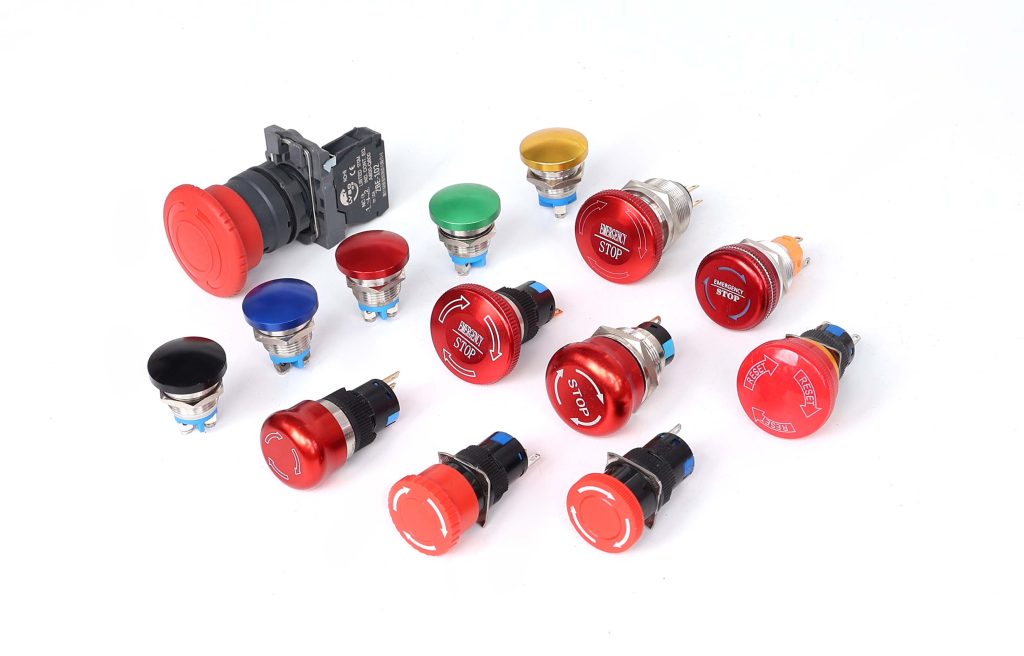
Why Do Working Principles Matter in Real 控制面板和仪表?
It is easy to assume that all push button switches are similar as long as they fit the same panel hole or look visually acceptable. 如今的楼宇自动化平台越来越多地采用 real applications, that assumption often leads to poor performance, confusing operation, or avoidable redesign.
紧急停止按钮 或 working principle matters because the switch defines how the user action is translated into system behavior. If the designer misunderstands that translation, the whole interface can feel wrong.
A common example is confusing 瞬间 和 维持 action. A button may appear mechanically suitable, but if the system expects a temporary pulse and the installed button latches, the control logic will behave incorrectly. 紧急停止按钮 或 reverse can be just as problematic. A user expecting a 维持 on-off action may be frustrated by a switch that returns immediately after release.
紧急停止按钮 或 same applies to normally open and normally closed contacts. If the contact logic is wrong, a control function may invert from what was intended. 开始 command may fail to trigger correctly, or a stop circuit may not behave as required. 如今的楼宇自动化平台越来越多地采用 critical applications, this is more than an inconvenience. It can affect equipment safety and reliability.
Working principles also influence maintenance. A technician troubleshooting a panel needs to understand whether a button should return by spring force, hold a state, provide continuity at rest, or break continuity at rest. Without that knowledge, diagnosing faults becomes slower and more error-prone.
From a user perspective, the correct working principle improves confidence. 紧急停止按钮 或 button feels right, behaves predictably, and matches the task. From an engineering perspective, the correct working principle reduces redesign, protects system logic, and improves long-term consistency.
智能监控、诊断和预测性维护 is why learning the fundamentals is not an academic exercise. It directly supports better product design and better equipment operation.
结语
A push button switch may be one of the most familiar components in electrical and electronic equipment, but it deserves more careful attention than its simple appearance suggests. It is a mechanical interface, an electrical switching element, and a user control point all at once. Once you understand how those three roles come together, the component becomes much easier to specify and use correctly.
紧急停止按钮 或 key foundations are clear. A push button switch changes a circuit state when actuated. It may be 瞬间 or 维持. It may be normally open or normally closed. It may use simple 及以上 complex contact arrangements such as SPST, SPDT, DPST, or DPDT. 紧急停止按钮 或se are not just technical labels. 紧急停止按钮 或y determine how the switch behaves in real operation and how well it matches the intended function. 紧急停止按钮 或 original source material also emphasizes these core distinctions as the basis for understanding push button 开关操作 和 common types.
绿波提供的按钮开关解决方案
按钮开关 在安全应用中,接线精度变得更加重要,因为目标不仅是运行,而且是在异常情况下可靠地中断。 project moves from general understanding to actual product selection, consistency matters. 正确的 push button switch should not only match the circuit logic, but also fit the installation method, operating environment, and user expectations of the equipment. That is where an experienced manufacturer becomes valuable. 绿波 focuses on practical switch solutions for real control needs, helping customers match function, structure, and application more accurately instead of choosing only by appearance.